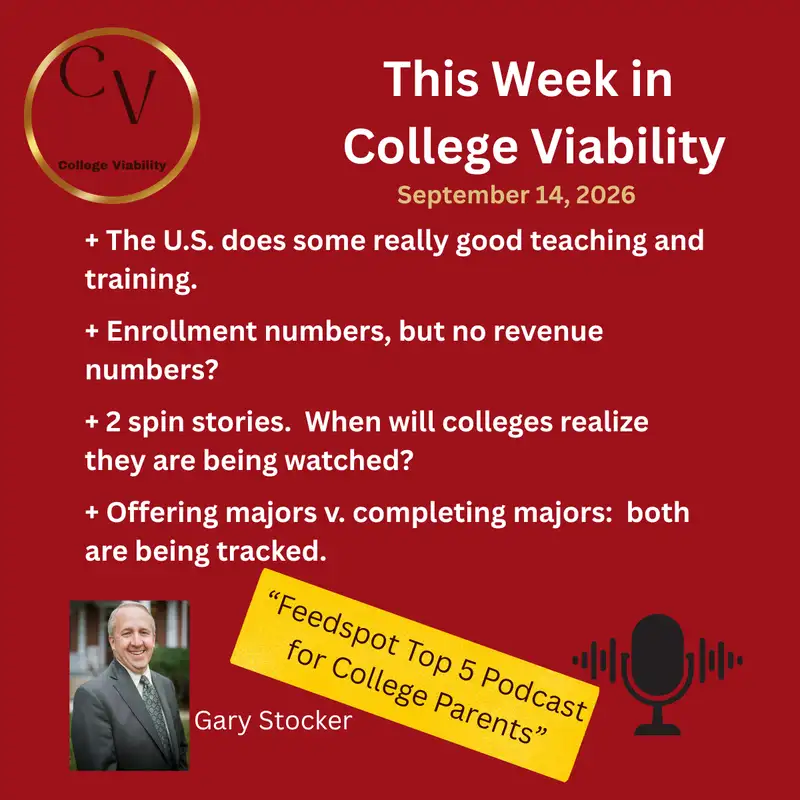
In this episode, I focus on a growing disconnect in higher education: colleges are working harder to increase enrollment, but enrollment alone does not equal student success or financial strength.
I examine how colleges remove admissions barriers, promote short-term enrollment increases, and heavily discount tuition to fill seats—often without discussing graduation rates, long-term enrollment trends, or the actual revenue those students generate. Using examples including the University of Arkansas Little Rock and Quincy University,
Families need to look beyond the positive headlines and examine the financial and student-outcome data colleges are less likely to promote.
I also explain why families should investigate how many students actually complete the majors colleges advertise and why a scholarship should often be viewed as a price discount, not a prize.
My central message is that access without success is not success and enrollment is a statistic; revenue is the reality. Families should look at FTE enrollment, traditional undergraduate trends, net tuition revenue, tuition discounting, graduation rates, and major completions to determine whether a college can realistically deliver the experience it is promising for the next four years